
Your Programming Isn't The Problem, Your Recovery System Is...
Why Hard-Working Coaches (or any workaholic...) Struggle To Recover.. And How Their Clients Suffer

It was coming up on 12:57 pm. On a Friday. The gym was basically empty. My head was not. I had 10 minutes until I was starting what was going to be the last session I had with a new client, affectionately nicknamed the “Terminator”. I knew I had about 5 minutes to let the boss know I was quitting. It just wasn’t working out the way I envisioned. I was cranky, working too much, way underpaid and all of it…yes, all of it - was my fault. Wait. What?
The Most Important Exercise: Sleep
If you’re a coach, trainer or instructor of some sort who’s working with people who are investing lots of their hard earned money into you, with the understanding that you’re going to do everything in your power to deliver them the best results, you better understand the power of sleep. The rest of this article and my whole paid community dives into the science of recovery & clarity as a coach. Quite helpful. If you’re the client of a coach, trainer or instructor of some sort, send them the share link for even better results.
Spoiler Alert - As you likely already know, I had an aha moment that day. I ended up realizing everything I was experiencing (short fuse, lack of creativity, loss of appetite, random injuries, lack of motivation, no real drive of any sort…) was indeed my undoing. Actually, the Terminator brought much needed insight into that fateful session. He told me, it’s easy to just keep working if you have no one waiting for you at home…” That hit. My dog had died last May, my queen lives 3 provinces away… I blamed work, when actually it was just revealing what was going on for years.
As a coach, I never wanted my sleep advice to live in the land of vibes, hacks, or Instagram quotes.
So instead of quitting the job, I ran a sleep and recovery experiment on the most honest subject I know: myself.
Using WHOOP, I tracked how my Recovery, Strain, and Sleep Performance shifted across three distinct phases:
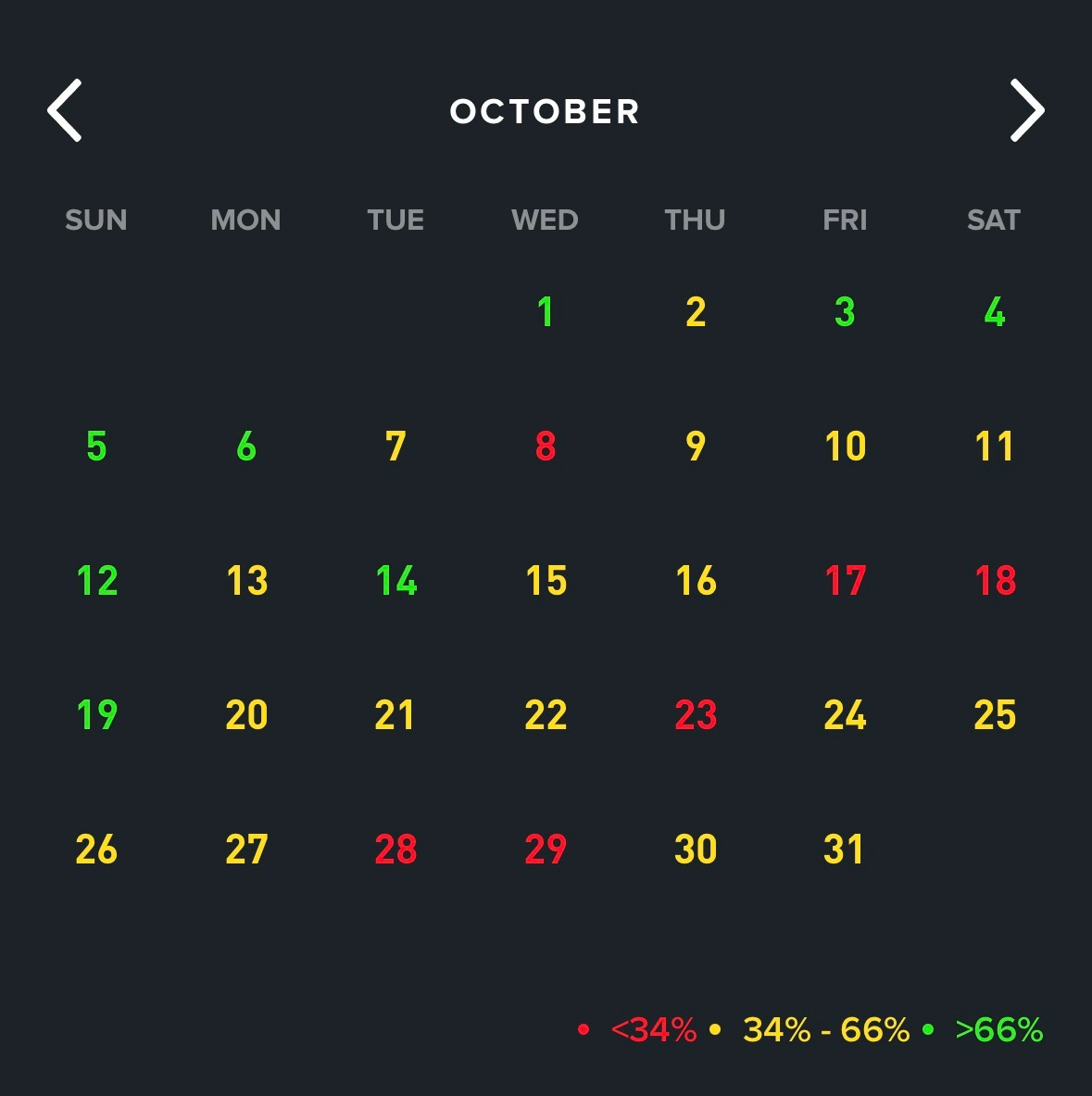
October: solid training, inconsistent sleep
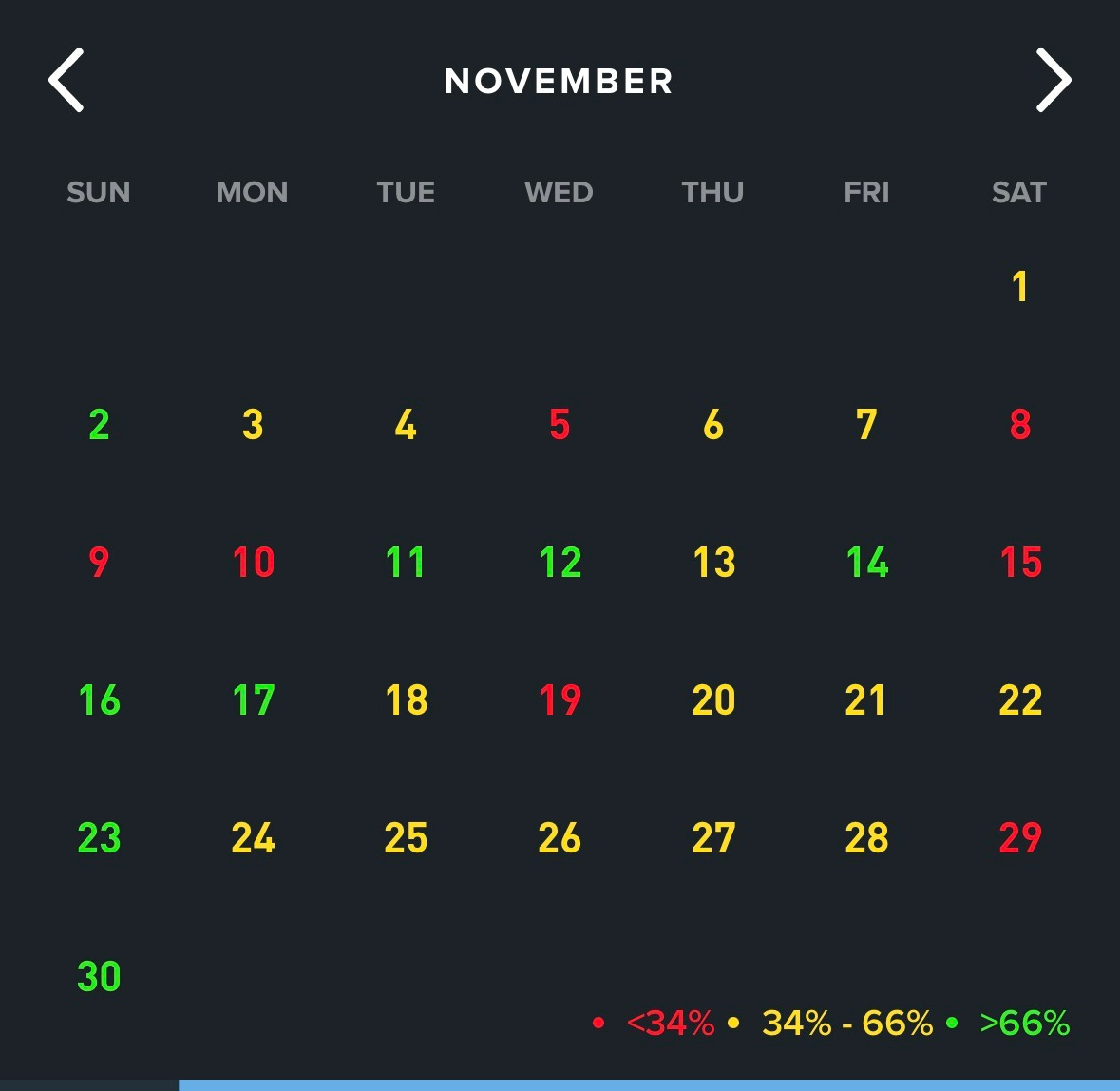
November: higher strain, more stress, growing sleep debt
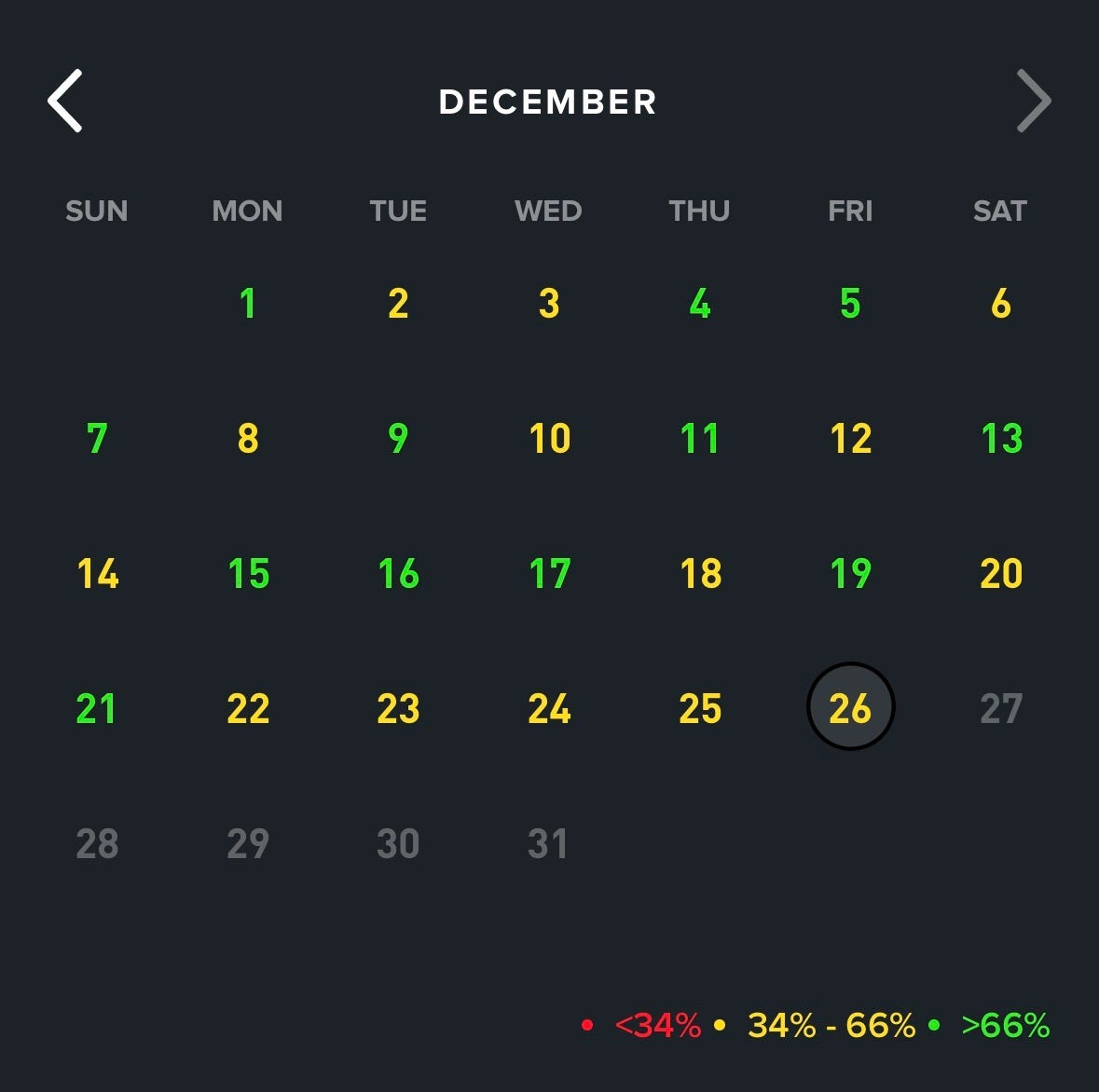
December (Dec 3–16): a deliberate deep rest block with tightened sleep habits and sound-based recovery
This article forms the backbone of a free 5-day Deep Rest Trial I’m running inside my Coaching app for you and your clients — a short, coach-guided sleep study where you can test these same levers on your own nervous system. Think of me as your assistant coach. Bring me and my medical-grade music & recovery protocol in to “amplify” your results… get it?
This ain’t no theory.
It’s what my body did in real time.
From “Getting By” to Deep Rest
October & November vs December
October: High Output, Leaky Foundation
October was classic “coach who trains hard” energy.
Regular high-strain days:
18.1 (Oct 1)
17.6 (Oct 3)
16.8 (Oct 14)
Many days clustered in the 13–16 range
Recovery was volatile:
Greens in the 70–90% range
Multiple red recoveries in the 15–31% range
Sleep patterns showed drift:
Sleep Consistency often 60–80%
Hours vs Need frequently 60–75%
Sleep Debt regularly exceeded 1–2 hours
Translation: the engine was strong, but the foundation leaked.
Training got done. Recovery paid the price.
November: More Load, More Volatility
November brought heavier total stress.
Multiple 15–19 strain days
A mix of solid green recoveries and repeated red runs
Sleep oscillated between:
strong sufficiency nights (high-80s / low-90s)
compressed nights in the 50–60% Hours vs Need range
Physiologically, this is what it looks like when performance stays high but stability hasn’t caught up yet — especially sleep consistency and debt management.
I was strong.
I was just inconsistently rested.
December: Two Weeks of Deliberate Deep Rest
In early December, I treated sleep the way I’d treat a competition block.
Same training intensity.
Different recovery intent.
Step 1: Locking the Sleep Window
Early December started rough:
Short nights
Sleep Debt climbed past 2 hours
Performance dipped
Then I extended intentionally.
Within 48 hours:
Sleep Debt dropped from 2:06 → 0:13
Hours vs Need climbed into the 90%+ range
From Dec 8–16:
Sleep Consistency stabilized 77–89%
Hours vs Need routinely 90–98%
Sleep Debt nearly erased
This is boring work.
It’s also the highest-return move you can make.
Step 2: Watching Recovery Respond
As sleep stabilized, Recovery followed — not instantly, but reliably.
A mix of yellows early
Then clustered greens
HRV stabilized predominantly 100+ ms
Resting heart rate trended toward the high-40s / low-50s
That’s the nervous system saying:
I’ve caught my breath.
Step 3: Training Stayed Demanding
This wasn’t a “stop training” phase.
During this window:
Multiple 16–18 strain days
High step counts
Solid caloric output
The story here isn’t “I slept more because I trained less.”
The story is:
I kept training hard — and finally gave my nervous system the conditions to adapt.
Where Sound Fits In
Music as a Recovery Agent
Here’s where my work diverges from typical sleep advice.
Alongside sleep timing and sufficiency, I layered in intentional sound-based downregulation:
Pre-sleep soundscapes to reduce cognitive and emotional arousal
Meditative audio to shorten sleep latency
Gentle, medical-grade compositions aimed at supporting Deep + REM sleep
Across this period, restorative sleep (Deep + REM) consistently landed in the 40–50% range — right where WHOOP considers optimal.
Do I think sound alone did this?
No.
Do I think structured sound + structured habits helped stabilize deeper, more restorative nights?
100%.
Both the data and my lived experience say yes.
From N=1 to a 5-Day Deep Rest Trial
This is why I built the free 5-day Deep Rest Trial.
Think of it as a short, guided experiment rather than a challenge.
Over 5 Days, You’ll:
Set a realistic, consistent sleep window
Run nightly sound-based wind-downs
Track either objective metrics or subjective readiness
Test one simple behavior lever
The question isn’t “Can I sleep more?”
The question is:
“What happens when I give my nervous system consistency, sufficiency, and a clear signal to downshift?”
How to Join
If you’re a coach, bring your clients.
If you’re a client, bring your coach.
Step 1: Join the Deep Rest Trial
→ [5 Day Deep Rest Trial]Step 2: Commit to 5 days of structured rest
Step 3: Track your before / after
Step 4: Compare notes the way we did here
I’ll be unpacking this experiment further in an upcoming podcast episode — including the exact nights, the sound design choices, and how to apply this inside real-world coaching. Join the trial to be featured.
Because you can do hard things. They just need to be approachable.
I make recovery approachable for coaches and the people they serve. Reach out below to join the sleep study and let’s help your people recover well enough to actually adapt.